

Flash Management & Booking for Tattoo Artists
Flash sales turn into DM chaos and double-claims fast. Here's how flash works as a business — and how CREW.INK manages flash sheets, claims, and deposits for artists.

Flash is one of the best parts of tattooing and one of the worst to run as a business. The art is the easy part. The headache is everything around it: tracking which designs are still available, fielding a flood of DMs the second a sheet drops, figuring out who claimed what first, and collecting deposits before someone ghosts. If you've ever woken up to forty messages all asking for the same piece, you know flash management is its own job.
This guide covers how flash works as a business, where it falls apart on a busy drop day, and how CREW.INK is built to manage flash specifically — sheets, claiming and booking, deposits, drop-day flow — for tattoo artists, not a generic salon scheduler.
What flash actually is as a business
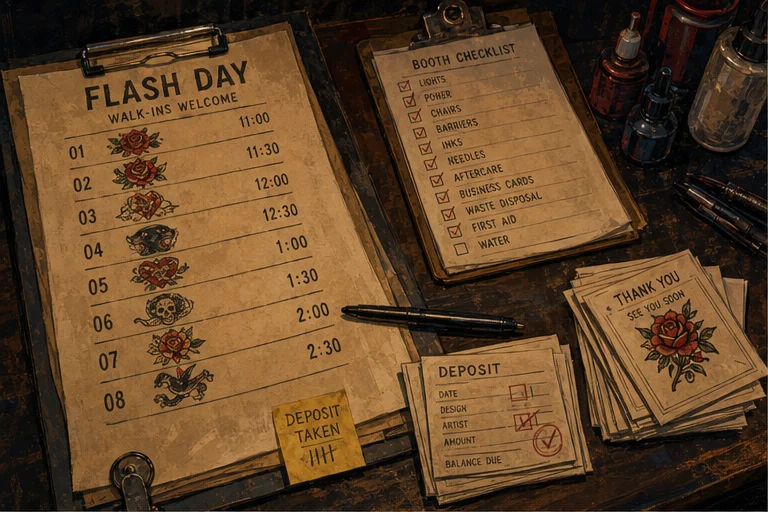
Flash is pre-drawn artwork a client picks from instead of commissioning a custom design. Traditionally it lived on the studio wall on a flash sheet — a page packed with multiple designs. The model works the same digitally: you draw a set of pieces, put them out, people choose one.
Where it gets interesting is two flavors of flash:
- Repeatable flash. A design you'll happily tattoo more than once. Different clients claim the same piece. Classic American traditional staples — daggers, swallows, hearts. These print money because you sell the same drawing over and over.
- One-off flash. A design that goes to a single person. Once claimed, it's gone. Usually your more personal or detailed pieces, and the scarcity is part of the appeal.
On top of that you've got the flash day (or flash drop) — a set time when you release a batch of designs, often at a fixed price, and let people book fast. Flash days fill a slow week, let you tattoo art you actually want to do, and bring in new clients. They're also where the mess peaks. If you're planning one, the full playbook on how to run a successful flash day pairs with this.
The core business decisions for any flash program: which designs are repeatable vs one-off, what each costs, whether a deposit holds the slot, and how someone claims a piece without it turning into a free-for-all.
Why drop day turns into chaos
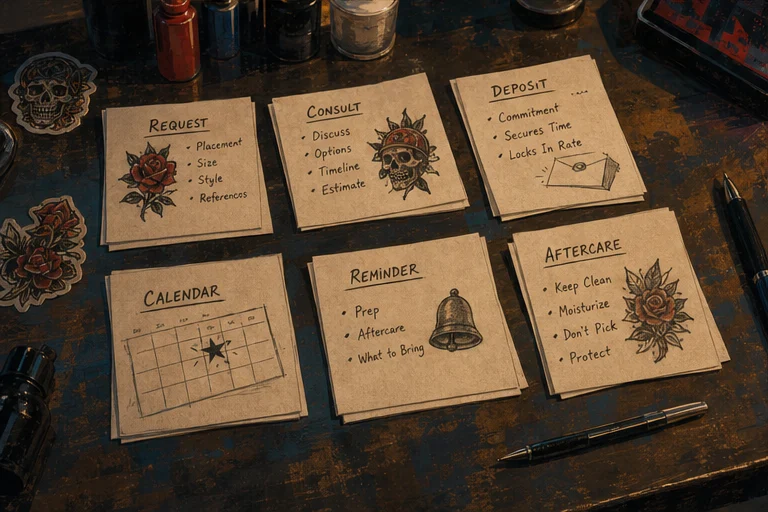
Here's what nobody warns you about: the better your flash, the worse the chaos. Demand is the problem.
The usual setup is a post saying "DM to claim." That breaks immediately:
- Double-claims. Three people DM for the same one-off piece within a minute. Now you're the bad guy telling two of them it's taken — and you look disorganized even though you did nothing wrong.
- DM chaos. Claims, questions, and "is this still available?" pile into the same unsearchable thread, and the paying client gets buried under tire-kickers.
- No record of what's taken. You're mentally tracking which designs are claimed and who paid. By piece twelve you've lost the thread.
- No deposit at claim time. Someone "claims" a piece, you mark it gone, then they vanish — a one-off held for a no-show.
- First-come is unprovable. When two people both swear they messaged first, you have no timestamp and no way to settle it fairly.
None of this is a discipline problem. It's a tooling problem. A DM thread was never built to be a checkout, an inventory tracker, and a payment processor at once.
How CREW.INK manages flash specifically
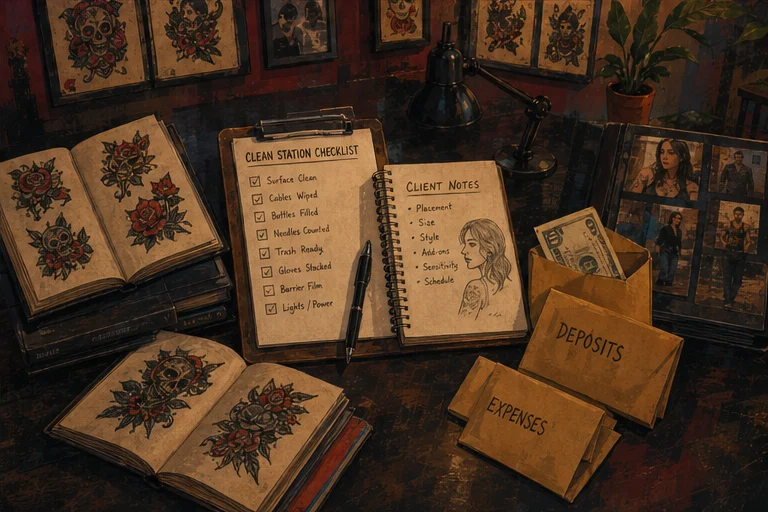
CREW.INK treats flash as a first-class thing, not an afterthought bolted onto an appointment calendar. The point is to take the drop-day mess off your plate so the art stays fun.
Flash sheets. You upload your designs and organize them as flash sheets — the digital version of the wall. Each piece is its own listed item with its own image, price, and availability, so clients browse a clean grid instead of scrolling your feed hunting for a screenshot.
Repeatable vs one-off, handled. You mark whether a design can be tattooed multiple times or goes to a single client. One-off pieces show as claimed the moment someone books — automatically, no manual updating, no double-claims. Repeatable pieces stay open so you keep selling them.
Booking a flash piece directly. Instead of "DM to claim," a client picks the exact design and books it through your page. The claim and the booking are the same action, so there's no gap between "I want this" and "this is mine." That gap is where double-claims and ghosting live — closing it is the entire game.
A real record of what's taken. You get a live view of which pieces are claimed, which are open, and who booked each one. No mental inventory, no spreadsheet, no screenshotting your own DMs to remember what's gone.
To reach beyond your existing followers, pieces can surface in the flash marketplace so new clients discover designs they can book on the spot — not just admire and scroll past.
Deposits on flash — the part that separates pros
A claim without a deposit isn't a booking. It's a promise, and promises don't pay rent.
CREW.INK lets you require a deposit the moment a flash piece is booked. The client picks the design, pays, and the slot is theirs — one flow. This does three things at once:
- Filters out no-shows. People who put money down show up. The deposit is the qualifier.
- Holds the design honestly. A one-off comes off the board because a paying client claimed it, not because someone said "save it for me."
- Settles the first-come question. The booking is timestamped and tied to a payment — no argument about who was first.
For flash, a non-refundable deposit applied to the final price is the standard that keeps drop day clean.
Specialist tools beat generic salon software
You can technically run flash through a general salon or barber app. You'll just spend the whole time fighting it.
Generic tools are built around one model: a fixed-duration service booked into a time slot. That's haircuts and nail appointments. Flash doesn't fit — a flash piece is a specific design with its own image, its own availability, and a one-off-vs-repeatable rule no salon app understands. There's no concept of "this exact drawing is now claimed," no flash sheet, no drop-day flow.
CREW.INK is built for tattoo artists, so flash is modeled the way you actually use it: designs, sheets, claims, deposits, drops. It sits alongside the rest of your booking instead of forcing flash into a slot-shaped hole — see how it fits together on the pricing page.
Frequently asked questions
How do I stop two people from claiming the same flash piece? Make the claim and the booking the same action. When a client books a one-off piece directly through your page, CREW.INK marks it claimed instantly, so the next person sees it's gone before they can double-book. A "DM to claim" thread can't do this — there's no shared, real-time record.
Should I take a deposit on flash? Yes, especially on drop day. A deposit at booking filters no-shows, honestly holds one-off designs, and gives you a timestamped record of who claimed what.
What's the difference between repeatable and one-off flash? Repeatable flash is a design you'll tattoo more than once, so multiple clients can book it. One-off flash goes to a single person and comes off the board once claimed. CREW.INK marks each piece so availability updates automatically.
Can I run a flash day without my DMs melting down? That's the whole reason to use a flash booking system. Release your sheet, let clients book the exact piece and pay the deposit themselves, and keep questions out of your claim flow. The drop-day playbook covers the rest of the prep.
Do I need tattoo-specific software, or will a salon app work? A salon app books fixed-duration time slots and has no idea what a flash sheet, a claimed design, or a one-off piece is. For flash, a tattoo-built tool like CREW.INK models designs, claims, and deposits the way artists actually work.
The bottom line
Flash should be the easy money — art you want to do, booked fast, filling slow weeks. The chaos isn't the flash; it's running a checkout, an inventory system, and a payment processor out of a DM thread. Move flash into a system built for it: real flash sheets, direct booking that doubles as the claim, automatic one-off availability, and a deposit at claim time. That's what CREW.INK does for tattoo artists — so your next drop day is about the art, not the inbox.
Run flash drops without the chaos
CREW.INK handles flash sheets, claims, and deposits so drop day stays organized.
Try CREW.INK Free