
Your First Tattoo: Prep and Healing Guide
Your first tattoo is easier when you know what happens next: choosing the artist, booking, sitting for the appointment, and healing it right.

Getting Your First Tattoo: The Honest Guide
Package: Google-Demand Lane #17 (FRESH — run 8)
Status: DRAFT COMPLETE
Proof Claims: ✅ Cleared 2026-05-09. Draft body contains no customer result claims, case studies, conversion lift statistics, no-show reduction figures, or specific product capability claims. Content is practical guide for first-time tattoo clients.
Author: Blog Content Producer
Date: 2026-04-23 (run 8)
Word Count: ~1,700 words
Reading Time: 9 min
Meta
- Slug:
/blog/first-tattoo-guide - Meta Title: Getting Your First Tattoo: What Actually Happens | LVL2
- Meta Description: Everything first-timers want to know: how to find the right artist, what it actually costs, whether it hurts, how long it takes, and how to care for it after.
- Target Keyword: first tattoo, getting a tattoo, first tattoo tips
- Intent: Awareness / SEO informational
- Hero Image Prompt: Close-up of a fresh small tattoo on a forearm — minimalist line art, healing stages visible in the texture of the skin around it. Clean, natural light. Not filtered. Real.
Content
What Nobody Tells You Before Your First Tattoo
You've been thinking about this for a while. Maybe years. You've saved reference images, maybe even started looking at artist portfolios. And now you're close enough to actually booking something — and you're realizing you don't know what you don't know.
That's normal. This guide covers what actually happens when you get your first tattoo: the search, the consultation, the cost, the appointment itself, and the aftercare that determines whether it heals well.
Finding the Right Artist for Your First Tattoo
Not all tattoo artists are the same, and "tattoo artist" covers a wide range of specialties. The first thing to understand is that most artists are booked — sometimes weeks or months in advance. If you find someone whose work you love, booking ahead is normal, not an exception.
What to look for in a portfolio:
- Consistent line work (lines should be clean and even at any size)
- healed work photos (fresh tattoos look different from healed ones — healed photos show what the artist actually delivers long-term)
- Style alignment (traditional, neo-traditional, realism, Japanese, minimalist, etc.)
- Volume and variety in the portfolio
Where to find artists:
- Instagram remains the primary portfolio tool for most artists
- LVL2's artist directory connects clients with studios using the platform
- Convention十里 (convention十里) — seeing artists work in person at conventions is one of the best ways to assess quality before booking
- Word of mouth from people with tattoos you actually like
A note on price shopping: The cheapest quote is not a red flag on its own — some artists price based on size and complexity, not just reputation. But a quote that seems too low relative to the artist's skill level and the complexity of the design is worth questioning. Quality tattooing is not cheap, and bad tattoos are expensive to fix.
The Consultation: What Actually Happens
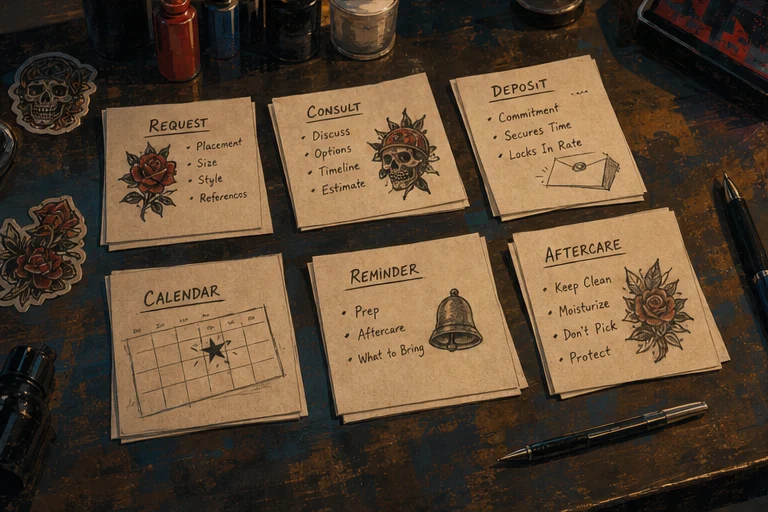
Most reputable artists offer a consultation before booking — either in person at the studio or over email. This is not a sales call. It's a conversation about what you want, what will work on your body, and whether the artist is the right fit.
What to bring to a consultation:
- Clear reference images (the more specific you are about what you want, the better the artist can tell you if they're the right person)
- An open mind about placement and size (an artist may tell you a design needs to be larger or placed differently to hold well on a given body part)
- Questions about their process, pricing, and booking timeline
What an artist might tell you during a consultation:
- That your idea needs modification to work well as a tattoo (this is not them rejecting you — it's them doing their job)
- That they don't specialize in the style you're asking for and to recommend someone who does
- A price range and booking timeline
Red flags during a consultation:
- An artist who won't show you a portfolio or healed work
- Someone who says your idea is "too simple" and pushes you toward something more complex and expensive
- A quote that changes significantly between consultation and booking
- Any reluctance to answer questions about their process or aftercare
What a First Tattoo Actually Costs
There is no single answer to what a tattoo costs, and part of getting your first tattoo is understanding how tattoo pricing works.
Hourly rate vs. flat rate: Some artists charge by the hour (ranges vary significantly by market and artist reputation). Others quote a flat rate for a specific piece. Neither is inherently better — what matters is that you understand the quote before you book.
What affects cost:
- Size and detail level
- Color vs. black and grey
- Placement (some areas are harder to tattoo and take longer)
- Artist experience and demand
- Your market (tattoo pricing varies significantly by city)
The deposit: Most artists require a deposit to book an appointment. This is standard practice — it secures your time and covers the artist's overhead. Deposits are typically non-refundable and are applied to the total cost of the tattoo. Before you book, understand the studio's deposit and cancellation policy.
What you're paying for: The price of a tattoo reflects more than just the time the artist spends tattooing you. It covers their training, the cost of their equipment, the rent on their studio space, their insurance, and the years they've spent developing their skill. A tattoo is a permanent addition to your body — it's worth understanding what you're paying for.
Does Getting a Tattoo Hurt?
Honest answer: yes. But "pain" is the wrong frame for most people.
The sensation varies significantly by placement. Areas with less fat and more bone — ribs, sternum, hands, feet, inner arm — tend to be more intense. Areas with more padding — thigh, calf, outer arm — tend to be less intense. Your artist will be able to tell you what to expect for your specific placement.
What surprises most first-timers is that the pain is usually intermittent rather than constant. It builds during longer sessions, and there are definitely uncomfortable moments. But most people who were worried about the pain describe it as something they could handle, not something that made them want to stop.
Practical tips for managing discomfort:
- Get a good night's sleep before your appointment
- Eat a solid meal within a few hours of your session (low blood sugar makes the experience harder)
- Avoid alcohol the night before and on the day of
- Stay hydrated
- Bring something to listen to — most artists are fine with headphones
What Happens During the Appointment
Once you're booked and your design is finalized, the appointment itself follows a consistent structure:
-
The artist prep work: The artist will clean the area, shave it if needed, and transfer your design onto stencil paper. They'll show you the stencil placement before turning it into a permanent mark.
-
The test patch / practice line: Most artists will start with a single line to confirm your skin responds normally and that you're comfortable with the sensation before continuing. This is normal and not a sign something is wrong.
-
The tattooing: The artist works in passes. You'll hear the machine, feel the vibration and puncturing sensation, and see them working in sections. The session length depends on the size and complexity of the piece.
-
The reveal: Once they're done, the artist will clean the tattoo, show you it in a mirror, and take photos for their portfolio (usually with your permission).
Total session time for a small to medium piece is typically one to three hours. Larger pieces may require multiple sessions.
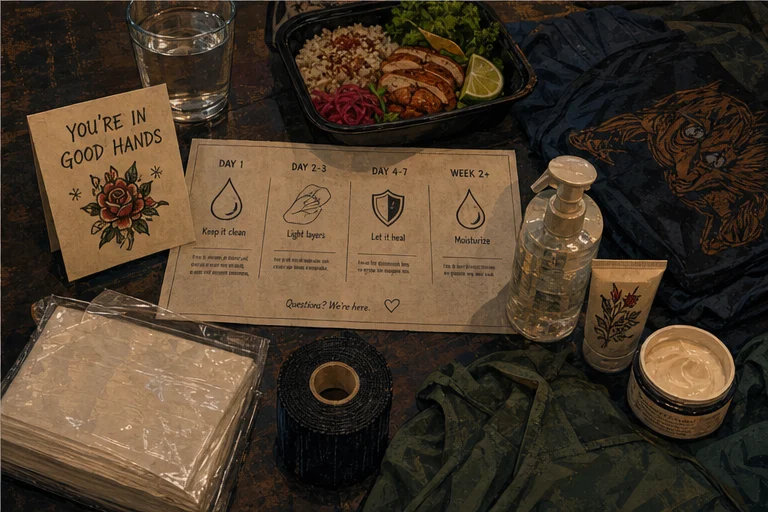
Aftercare: The Part That Determines How It Heals
The tattoo you leave the studio with is not the finished product. It takes two to three weeks to heal fully, and what you do during that time determines whether it looks the way it was supposed to look.
What to do in the first 24 hours:
- Leave the bandage on for the time the artist specifies (typically 1–4 hours, sometimes overnight depending on the studio's protocol)
- Wash your hands before touching the tattoo
- Gently wash the tattoo with unscented, alcohol-free soap and warm water
- Pat dry with a clean paper towel (not a towel you reuse)
- Apply a thin layer of unscented, tattoo-specific ointment or fragrance-free lotion as directed by your artist
What not to do:
- Don't pick at scabs or peeling skin (this can pull ink out and cause scarring)
- Don't submerge the tattoo in water (no pools, no baths, no lakes) for at least two weeks
- Don't expose a fresh tattoo to direct sunlight
- Don't scratch it, even when it starts to peel and feel tight
- Don't use scented lotion, petroleum-based products (like Vaseline), or products with alcohol
Signs of infection to watch for: Tattoos can get infected, though it's not common when aftercare is followed. Watch for: spreading redness beyond the tattoo area, increasing pain after the first 48 hours, pus or discharge, fever, or a rash that spreads. If any of these occur, contact a healthcare provider.
The Healing Timeline
Days 1–3: The tattoo is swollen, red, and may ooze slightly. It may feel hot or hypersensitive. Keep it clean, apply ointment or lotion as directed, and avoid touching it with unwashed hands.
Days 4–14: The tattoo will peel and may feel tight or itchy. This is the skin healing, not the tattoo healing, but the peeling is normal. Continue with gentle washing and moisturizing. Do not pick.
Weeks 2–4: The outer layers of skin are healing. The tattoo may look slightly dull or cloudy — this is temporary. The true color and clarity of the tattoo won't be fully visible until the healing process is complete.
After 4 weeks: The tattoo is healed on the surface. The deeper layers of skin are still remodeling beneath the surface, but you can return to normal care. The final appearance of the tattoo is now visible.
Summary
Getting your first tattoo is a process, not a single decision. The key steps:
- Find an artist whose style matches what you want — don't price shop on quality
- Ask questions during the consultation, including about their process, pricing, and aftercare
- Understand the deposit policy and total cost before you book
- Prepare practically: sleep, eat, stay hydrated, skip the alcohol
- Follow aftercare instructions exactly, especially in the first two weeks
- Watch for signs of infection and seek care if something looks or feels wrong
The best first tattoos are the ones where you did the research, found the right artist, and gave yourself enough time to heal properly. Rushing any of those steps is where people end up with regrets.
Make first bookings feel clear
LVL2 helps artists collect the details clients need to share before an appointment, so first-timers know what to send and what happens next.
Try LVL2 Free