Skip to content
LVL2
Less admin
Appointment schedulingLet clients request time, pay deposits, and get reminders.Booking formsCustom intake without the DM screenshot pile.EventsHost flash days, conventions, and guest spots.
More money
Deposits + paymentsReduce no-shows and last-minute cancellations.FlashUpload, organize, and book flash effortlessly.StoreMerch, prints, flash, and studio goods.
Other bits
ArtistsBrowse artists and point clients at the right work.MapGet found by clients searching by place.ExchangeSell artist tools, templates, and education.
What's new in LVL2LVL2 illustrated shop stack with booking, walk-ins, team, merch, and paymentsOne shop stack, cleaner handoffs.Booking, flash, Store, clients, and payments under one roof.
ArtistsStoreExchangePricingFAQ
Categories
What's NewBusiness of TattooingArtist StoriesNewsAll articles
LVL2 booking flow screens for tattoo artistsNewsBooking systems that do not eat the dayThe moving parts: requests, approvals, deposits, and reminders.LVL2 deposit and payment workflow artworkBusiness of TattooingTattoo deposits strategy guideProtect time without making clients feel managed.LVL2 no-show prevention illustration for tattoo artistsFrom the nerdsSay goodbye to no-showsDeposits, reminders, and fewer loose ends.LVL2 creative studio artwork for artist brandingArtist StoriesMake the booking flow feel premiumSmall brand details that make clients trust the process.LVL2 flash drop artwork for tattoo eventsArtist StoriesHost a flash day without chaosPlan the drop, take deposits, and keep the list clean.LVL2 artist growth and discovery artworkBusiness of TattooingMaximize convention ROIMake every minute count before, during, and after the booth.
Contact
Sign InStart Booking
Features
Appointment schedulingLet clients request time, pay deposits, and get reminders.Booking formsCustom intake without the DM screenshot pile.EventsHost flash days, conventions, and guest spots.Deposits + paymentsReduce no-shows and last-minute cancellations.FlashUpload, organize, and book flash effortlessly.StoreMerch, prints, flash, and studio goods.ArtistsBrowse artists and point clients at the right work.MapGet found by clients searching by place.ExchangeSell artist tools, templates, and education.
Blog
What's NewFresh LVL2 updates and launch notes.Business of TattooingDeposits, pricing, and money leaks.Artist StoriesHow working artists run the chair.NewsPlatform updates and industry notes.All articlesBrowse every LVL2 guide and teardown.Booking systems that do not eat the dayThe moving parts: requests, approvals, deposits, and reminders.Tattoo deposits strategy guideProtect time without making clients feel managed.Say goodbye to no-showsDeposits, reminders, and fewer loose ends.Make the booking flow feel premiumSmall brand details that make clients trust the process.Host a flash day without chaosPlan the drop, take deposits, and keep the list clean.Maximize convention ROIMake every minute count before, during, and after the booth.
Explore
ArtistsStoreExchangePricingFAQContact
Sign InStart Booking

Get started

Start bookingBrowse artistsBrowse storesLVL2 ExchangeLog in

Features

Booking requestsPayment statusFlash eventsStoreLVL2 ExchangeSMS automationWaivers

Compare

All comparisonsLVL2 vs BooksyLVL2 vs VagaroLVL2 vs SquareLVL2 vs Venue InkLVL2 vs Tattoodo

Company

AboutFAQContactsupport@lvl2.ink(606) 386-1808204 E Mount Vernon St
Somerset, KY 42501
Terms of servicePrivacy policyRefund policyCancellation policy
LVL2

Built for artists, by an artist.

Built by Russell Cain

© 2026 LVL2. All rights reserved.
ENESPTFR
TermsPrivacyFAQSupport
Download on theApp StoreGet it forAndroid
INDUSTRY

How to Structure a Tattoo Apprenticeship: What to Charge, What to Teach, and How to Stay Legal

May 8, 2026 · 10 min read

A promising tattoo artist wants to apprentice under you. Here's how to structure it: curriculum phases, what to charge, legal considerations, and common mistakes.

How to Structure a Tattoo Apprenticeship: What to Charge, What to Teach, and How to Stay Legal

Why Apprenticeships Still Matter

Tattoo apprentice preparing a clean station at dusk
Useful guides make invisible studio habits visible.

Tattooing is still largely learned through apprenticeship — not because schools do not exist, but because a structured apprenticeship under a skilled working artist gives you something no school can: real clients, real pressure, and real feedback on real work. The best tattoo artists alive learned by watching, assisting, and eventually tattooing under artists who knew more than them.

But not all apprenticeships are created equal. A bad apprenticeship under a careless artist can teach you sloppy habits, poor hygiene, and a style that is hard to unlearn. The goal is to find an apprenticeship that challenges you, treats you professionally, and sets you up to tattoo independently.


What a Good Apprenticeship Includes
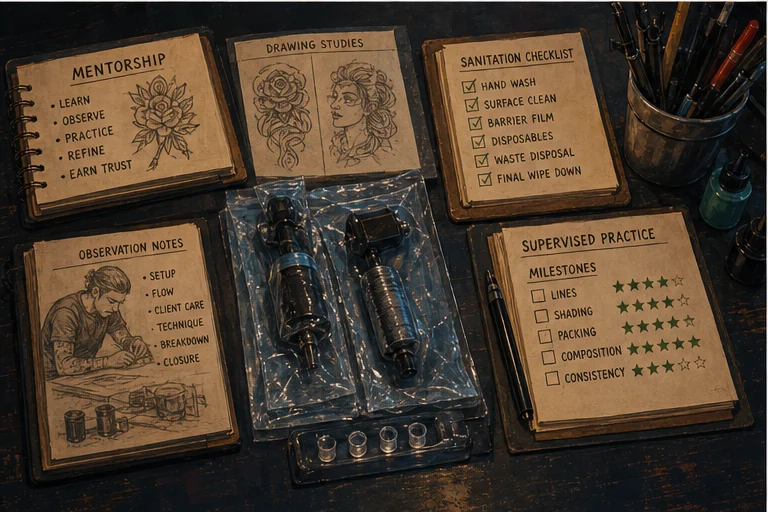
Gritty LVL2-style tattoo shop critique scene with a mentor reviewing an apprentice's flash drawings
A real apprenticeship should include direct critique, not vague encouragement or endless watching from the corner.

Structured learning, not just watching:

  • You should be learning every day, not just holding equipment and watching
  • Expect to start with fundamentals: setup, teardown, hygiene, how to talk to clients
  • You should be drawing constantly — most of your early apprenticeship should be spent developing your drawing skills
  • You should be tattooing as soon as you are ready — supervised, but actively practicing

Professional environment:

  • You should be treated as a worker, not free labor
  • Hygiene standards should be high and enforced — this is not the place to cut corners
  • Your mentor should communicate expectations clearly
  • You should receive honest feedback, not just praise

Fair terms:

  • There should be a clear timeline — an apprenticeship that never ends is not an apprenticeship
  • There should be a clear understanding of what you are responsible for (cleaning, assisting, drawing, eventually tattooing)
  • If you are paying for the apprenticeship, you should know exactly what you are paying for
  • If you are working for free in exchange for training, the exchange should be clearly defined and fair

Red Flags in an Apprenticeship
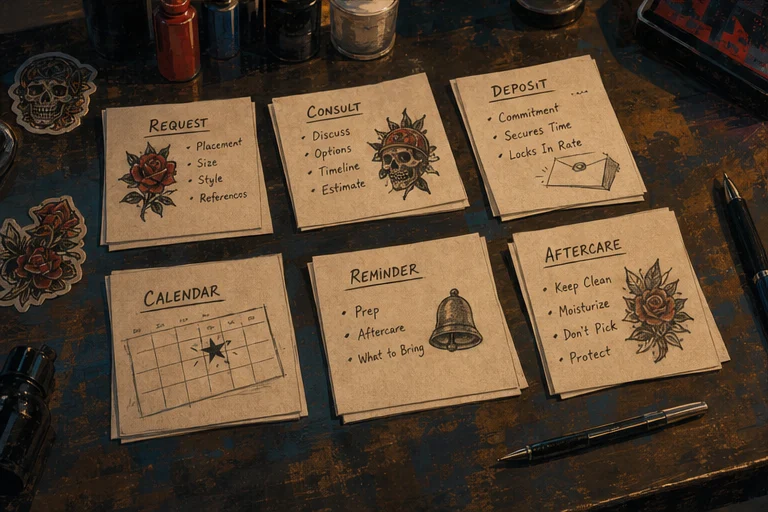
Dramatic close-up of tattoo apprenticeship fundamentals with wrapped equipment, gloves, and practice skin
The boring fundamentals matter: setup, teardown, hygiene, repetition, and clean habits before style.

Watch out for:

  • An artist who tells you to watch but never lets you tattoo — a true apprenticeship includes practice on real skin
  • An apprenticeship with no end date or progression plan
  • An artist who refuses to share their knowledge or gives you busy work instead of real mentorship
  • An apprenticeship that requires you to pay large sums of money upfront with no clear curriculum
  • An artist with poor hygiene or unsafe practices — you do not want to learn bad habits
  • An artist who treats apprentices as disposable labor rather than people worth investing in

What You Are Responsible For

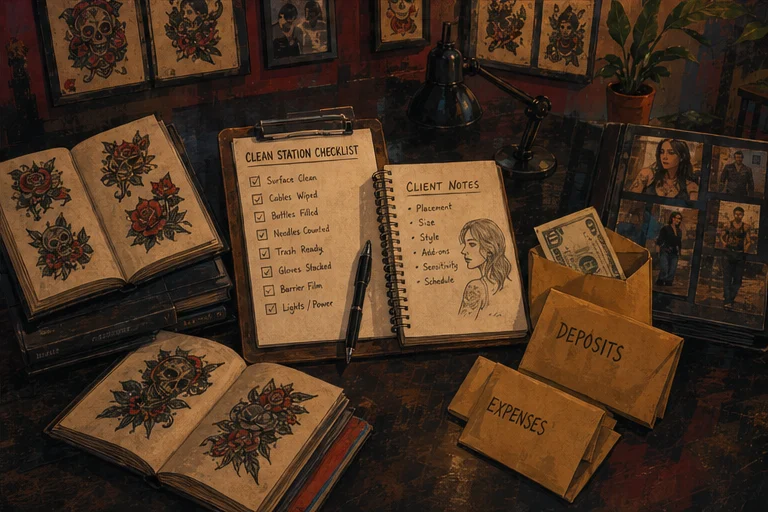
Surreal tattoo flash noir scene showing red flags in a bad apprenticeship
If the arrangement has no timeline, no teaching, and no path to supervised practice, that is not mentorship.

Drawing:

  • The single most important thing you bring to an apprenticeship is your drawing
  • You should be drawing every day — designs, flash, copywork, fundamentals
  • If you are not drawing, you are not ready to tattoo
  • Bring your sketchbook to every session

Assisting:

  • Setting up stations, cleaning, managing supplies
  • This is not glamorous but it is how you learn the rhythm of a working studio
  • Treat it professionally — show up on time, be reliable, be clean

Showing up:

  • An apprenticeship requires consistency — you cannot learn tattooing in fragments
  • If you are not committed enough to show up reliably, you are wasting your mentor's time
  • Every session is a learning opportunity if you pay attention

How to Find an Apprenticeship

Start with your portfolio:

  • You do not need to be a finished artist to start an apprenticeship — but you need to show that you are serious and improving
  • A strong drawing portfolio is your best application
  • If your drawing is not where it needs to be, work on it before seeking an apprenticeship

Approach artists you respect:

  • Find artists whose work and professionalism you admire
  • Follow their work, engage with their content, be a visible part of their community
  • When you reach out, be specific about why you are approaching them — not just "I want to learn from you"

Consider what you can offer:

  • Studios are busy — what would make taking you on worth the time investment?
  • Reliability, professionalism, a strong work ethic, a good attitude
  • If you cannot draw yet, show that you are working on it

If You Are an Artist Considering Taking on an Apprentice

Be honest about what you can offer:

  • Do not take on an apprentice if you do not have time to teach them
  • A rushed apprenticeship is not a real apprenticeship

Set clear expectations from the start:

  • What are they responsible for?
  • What will they learn, and in what order?
  • How long will it take?
  • What happens if it is not working out?

Treat them professionally:

  • They are learning from you — that deserves respect
  • Do not use them as free labor without giving them real knowledge in return
  • Give them honest feedback — not mean, but real

Gritty LVL2-style tattoo shop critique scene with a mentor reviewing an apprentice's flash drawings
A real apprenticeship should include direct critique, not vague encouragement or endless watching from the corner.
Dramatic close-up of tattoo apprenticeship fundamentals with wrapped equipment, gloves, and practice skin
The boring fundamentals matter: setup, teardown, hygiene, repetition, and clean habits before style.
Surreal tattoo flash noir scene showing red flags in a bad apprenticeship
If the arrangement has no timeline, no teaching, and no path to supervised practice, that is not mentorship.

Manage your studio operations cleanly

LVL2 handles client intake, booking requests, and studio workflows so you can focus on the work.

Try LVL2 Free
Topics:INDUSTRY
Share
Next reads

Keep reading

Stay in the same problem space. These are the articles most likely to help with the next decision.

  • LVL2 guideClient ManagementOpen the next LVL2 guide while this problem is still fresh.Read next
  • LVL2 guideBooking FeaturesOpen the next LVL2 guide while this problem is still fresh.Read next
  • LVL2 guideTattoo Studio Management SoftwareOpen the next LVL2 guide while this problem is still fresh.Read next